🍽️ Recettes
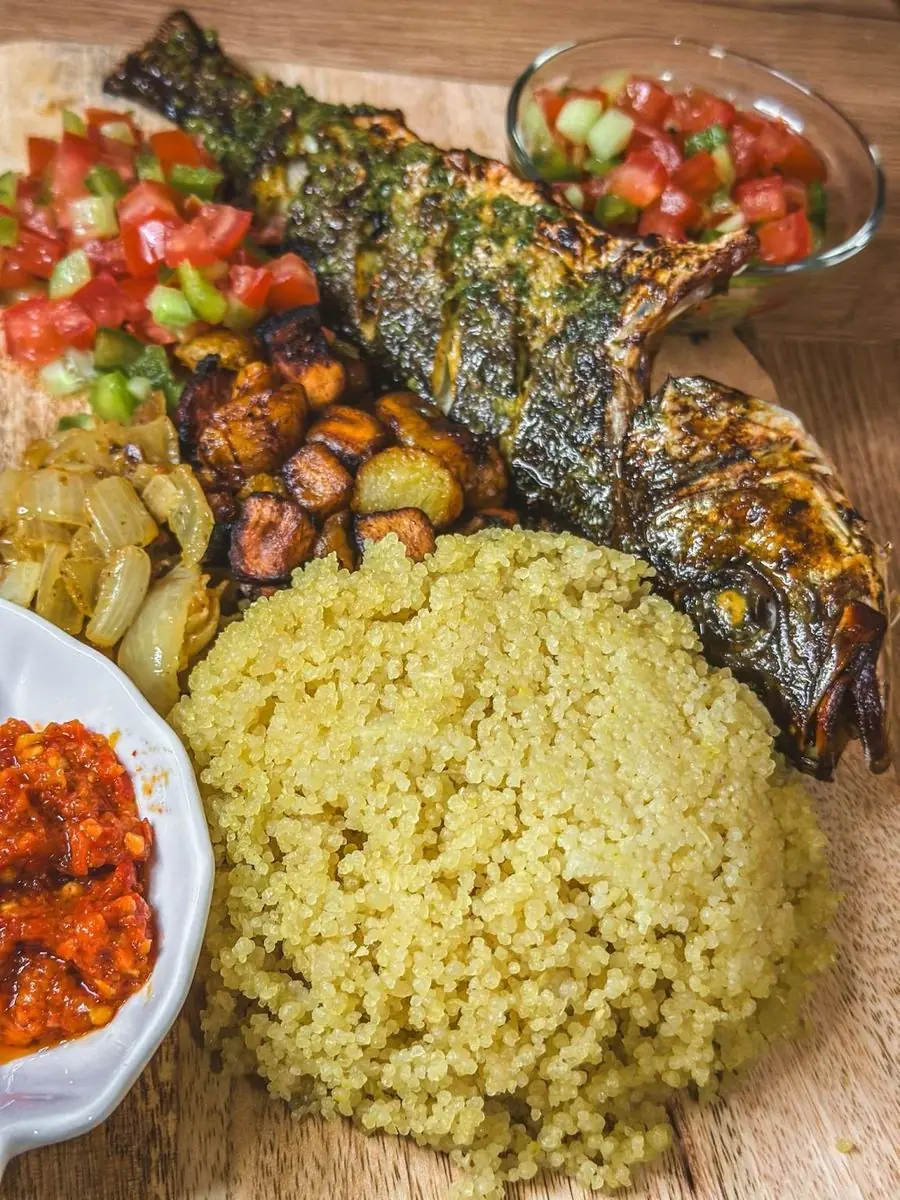
Attiéké au poisson braisé
- Préparation
- 30 min
- Cuisson
- 25 min
- Temps total
- 55 min
- Portions
- 4 personnes
- Niveau
- Facile
- Origine
- Côte d'Ivoire
- Type de plat
- Plats
L'Attiéké au poisson braisé associe la semoule de manioc fermentée emblématique de Côte d'Ivoire à un poisson mariné et grillé sur la braise, formant l'un des repas les plus identitaires et les plus populaires du pays. Vendu à chaque coin de rue d'Abidjan, ce duo incarne à lui seul la cuisine ivoirienne.
L'attiéké, préparation ancestrale du peuple Ébrié à base de manioc fermenté puis granulé et cuit à la vapeur, apporte une texture légère et légèrement acidulée qui contraste parfaitement avec le poisson fumé et épicé.
Histoire et origine
L'Attiéké est une préparation ancestrale du peuple Ébrié, établi sur la lagune d'Abidjan, dont le savoir-faire de fermentation et de granulation du manioc se transmet depuis des générations, traditionnellement par les femmes de la communauté. Devenu plat national et véritable symbole identitaire de la Côte d'Ivoire, il accompagne aujourd'hui aussi bien le poisson braisé que le poulet ou les crevettes, sans jamais perdre son authenticité originelle.
Les 5 versions de la recette
Végétarienne : Remplacer le poisson par des légumes grillés (aubergines, poivrons, courgettes) marinés aux mêmes épices.
Végétalienne : Identique à la version végétarienne.
Sans gluten : Nativement sans gluten.
Économique : Remplacer le poisson entier par des filets de poisson économiques, marinés et grillés à la poêle plutôt qu'au grill.
Gastronomique : Utiliser des poissons de belle taille (capitaine ou thiof) et ajouter des crevettes grillées en accompagnement.
Service, conservation et accords
Dressage : Servir chaud, l'attiéké et le poisson dans la même assiette, avec la salade fraîche et la sauce pimentée à part. Ajouter de l'Alloco (plantain frit) en accompagnement si désiré.
Conservation : 2 jours au réfrigérateur, attiéké et poisson séparés dans des contenants hermétiques.
Congélation : L'attiéké se congèle bien ; le poisson grillé perd en texture à la décongélation, mieux vaut le préparer frais.
Réchauffage : Attiéké à la vapeur ou au micro-ondes ; poisson à la poêle ou au four quelques minutes pour raviver le croustillant.
Accords mets-boissons : Bissap frais ou bière locale bien fraîche.
Attiéké with braised fish pairs the fermented cassava couscous emblematic of Côte d'Ivoire with fish marinated and grilled over charcoal, forming one of the most distinctive and beloved meals in the country. Sold on every street corner in Abidjan, this duo alone embodies Ivorian cuisine.
Attiéké, an ancestral preparation of the Ébrié people made from fermented cassava that is granulated and steamed, brings a light, slightly tangy texture that perfectly contrasts with the smoky, spiced fish.
History and origin
Attiéké is an ancestral preparation of the Ébrié people, settled on the Abidjan lagoon, whose know-how of fermenting and granulating cassava has been passed down for generations, traditionally by the women of the community. Having become a national dish and a true symbol of identity for Côte d'Ivoire, it now accompanies braised fish as well as chicken or shrimp, never losing its original authenticity.
The 5 recipe variations
Vegetarian: Replace the fish with grilled vegetables (eggplant, peppers, zucchini) marinated in the same spices.
Vegan: Identical to the vegetarian version.
Gluten-free: Naturally gluten-free.
Budget-friendly: Replace the whole fish with economical fish fillets, marinated and pan-seared rather than grilled.
Gourmet: Use large, handsome fish (captain or thiof) and add grilled shrimp as an accompaniment.
Serving, storage and pairings
Plating: Serve hot, with the attiéké and fish on the same plate, alongside fresh salad and spicy sauce on the side. Add Alloco (fried plantain) as an accompaniment if desired.
Storage: 2 days in the refrigerator, attiéké and fish stored separately in airtight containers.
Freezing: Attiéké freezes well; grilled fish loses texture when thawed, so it's best prepared fresh.
Reheating: Attiéké by steaming or in the microwave; fish in a pan or oven for a few minutes to revive the crispness.
Food and drink pairings: Fresh bissap or a nice cold local beer.
Ingrédients
- 600 g d'attiéké précuit (semoule de manioc)
- 2 poissons entiers (dorade ou bar), vidés et écaillés
- 2 tomates
- 1 concombre
- 1 oignon rouge
- 2 citrons
- 3 gousses d'ail
- 1 piment frais
- Huile d'arachide
- Sel, poivre
- 600 g precooked attiéké (cassava couscous)
- 2 whole fish (sea bream or sea bass), cleaned and scaled
- 2 tomatoes
- 1 cucumber
- 1 red onion
- 2 lemons
- 3 garlic cloves
- 1 fresh chili
- Peanut oil
- Salt, pepper
Préparation
- Inciser les poissons sur les deux faces et les mariner avec l'ail écrasé, le jus d'un citron, le sel et le poivre pendant au moins 20 minutes.
- Griller les poissons sur la braise ou au four, 10 à 12 minutes de chaque côté, jusqu'à ce que la peau soit bien dorée et croustillante.
- Pendant ce temps, réhydrater l'attiéké précuit à la vapeur ou au micro-ondes selon les instructions du paquet, jusqu'à ce qu'il soit chaud et léger.
- Préparer la salade en mélangeant les tomates, le concombre et l'oignon rouge émincé, arrosés du jus du second citron.
- Préparer une sauce pimentée simple en mixant le piment frais avec un peu d'huile et de sel.
- Dresser l'attiéké dans les assiettes, disposer le poisson grillé par-dessus, accompagner de la salade fraîche et de la sauce pimentée à part.
- Score the fish on both sides and marinate with crushed garlic, the juice of one lemon, salt and pepper for at least 20 minutes.
- Grill the fish over charcoal or in the oven, 10 to 12 minutes per side, until the skin is nicely golden and crispy.
- Meanwhile, rehydrate the precooked attiéké by steaming or in the microwave according to package instructions, until hot and light.
- Prepare the salad by mixing the tomatoes, cucumber and thinly sliced red onion, dressed with the juice of the second lemon.
- Prepare a simple spicy sauce by blending the fresh chili with a little oil and salt.
- Plate the attiéké in dishes, arrange the grilled fish on top, and serve with fresh salad and spicy sauce on the side.
Valeurs nutritionnelles (par portion)
- Calories
- ≈ 390 kcal
- Protéines
- 24 g
- Glucides
- 48 g
- Lipides
- 11 g
- Fibres
- 4 g
- Vitamines clés
- Vitamine C, Vitamine B12
- Minéraux clés
- Fer, Phosphore
Questions fréquentes
Qu'est-ce que l'attiéké exactement ?
C'est une semoule de manioc fermentée, granulée puis cuite à la vapeur, à la texture légère et légèrement acidulée, considérée comme le plat national de Côte d'Ivoire.
It is a fermented cassava couscous, granulated then steamed, with a light and slightly tangy texture, considered the national dish of Côte d'Ivoire.
Peut-on acheter de l'attiéké déjà prêt à l'emploi ?
Oui, l'attiéké précuit et surgelé, vendu en épicerie africaine, ne nécessite qu'une réhydratation rapide à la vapeur ou au micro-ondes.
Yes, precooked and frozen attiéké, sold in African grocery stores, only requires quick rehydration by steaming or in the microwave.
Quel poisson choisir pour l'Attiéké ?
La dorade et le bar sont traditionnels, mais tout poisson entier à chair ferme disponible localement, comme le tilapia, convient très bien.
Sea bream and sea bass are traditional, but any whole firm-fleshed fish available locally, such as tilapia, works very well.
Peut-on préparer l'Attiéké au poulet plutôt qu'au poisson ?
Oui, c'est une variante très populaire (Attiéké au poulet) où le poulet mariné et grillé remplace simplement le poisson, avec la même garniture.
Yes, it is a very popular variation (Attiéké with chicken) where marinated and grilled chicken simply replaces the fish, with the same garnishes.
Comment savoir si l'attiéké est bien réhydraté ?
Il doit être chaud, léger et légèrement granuleux, sans grumeaux ni excès d'humidité ; ajuster le temps de vapeur selon la texture obtenue.
It should be hot, light and slightly granular, without lumps or excess moisture; adjust steaming time according to the texture obtained.
L'Attiéké se mange-t-il froid ?
L'attiéké lui-même peut se déguster tiède ou froid en salade, mais le poisson grillé est meilleur servi chaud, juste après la cuisson.
The attiéké itself can be enjoyed warm or cold in a salad, but the grilled fish is best served hot, right after cooking.