🥤 Recettes
Bissap / Foléré : la boisson d'hibiscus camerounaise
- Préparation
- 10 min
- Cuisson
- 10 min
- Temps total
- 20 min
- Portions
- 6 personnes
- Niveau
- Facile
- Origine
- Cameroun
- Type de plat
- Boissons
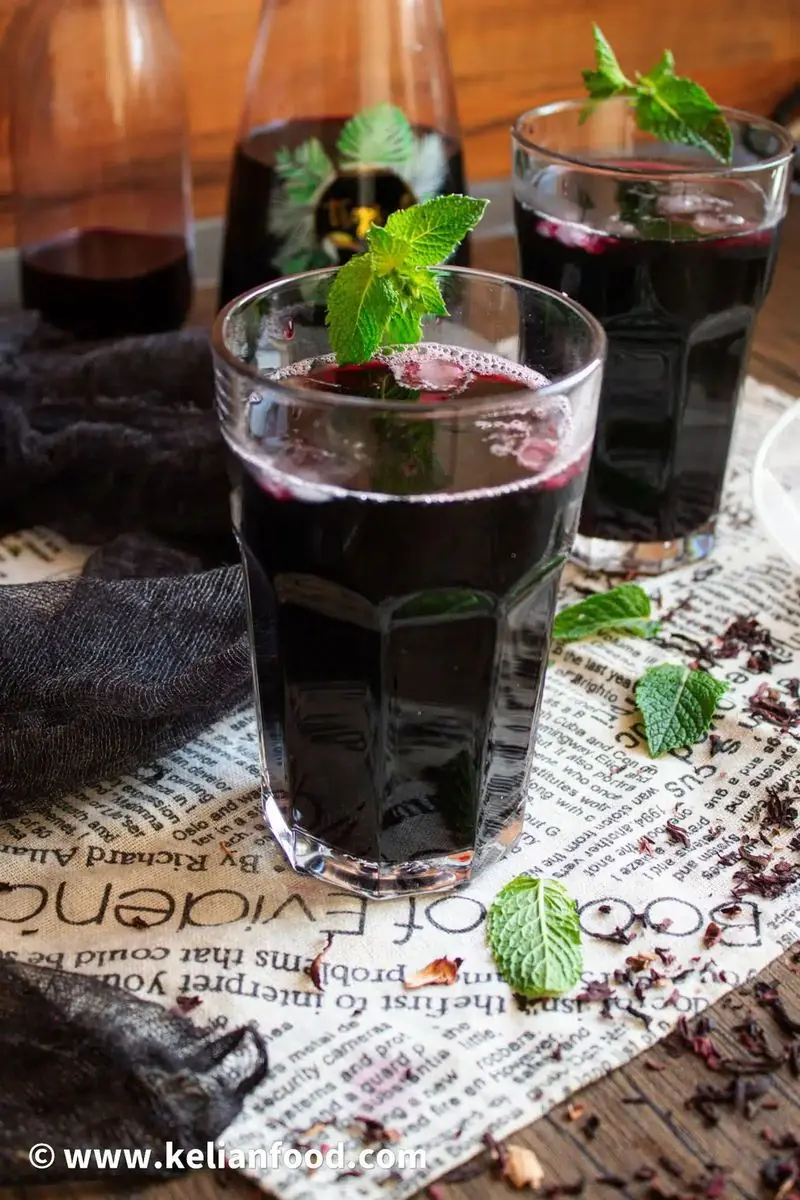
Au Cameroun, la boisson connue ailleurs sous le nom de bissap se nomme Foléré : une infusion rouge vif, acidulée et rafraîchissante, préparée à partir des calices séchés de la fleur d'hibiscus (Hibiscus sabdariffa), aussi appelée oseille de Guinée.
Servi glacé lors des grandes occasions ou simplement pour se rafraîchir, le Foléré incarne l'hospitalité camerounaise : c'est souvent le premier geste d'accueil offert aux invités, à l'image du bissap dans toute l'Afrique de l'Ouest.
Histoire et origine
L'Hibiscus sabdariffa, plante tropicale originaire d'Asie et des îles du Pacifique, a été introduite en Afrique de l'Ouest au XIXe siècle et s'est parfaitement adaptée au climat sahélien, notamment dans l'Extrême-Nord du Cameroun où les fleurs sont récoltées, dans la région de Mayo-Danaï en particulier. Cette même boisson porte des noms différents selon les pays : bissap au Sénégal (d'origine wolof), karkadé en Égypte, zobo au Nigeria, sobolo au Ghana — et foléré au Cameroun.
Les 5 versions de la recette
Végétarienne : Nativement végétal.
Végétalienne : Nativement végétal.
Sans gluten : Nativement sans gluten.
Économique : Version nature, sans ajout de gingembre ni menthe, avec un minimum de sucre.
Gastronomique : Version enrichie au gingembre frais, zeste d'agrumes et sirop de fruits maison, servie très fraîche avec des glaçons.
Service, conservation et accords
Dressage : Servi bien frais, avec ou sans glaçons, dans un verre ou une carafe.
Conservation : 3 à 4 jours au réfrigérateur dans une bouteille ou un contenant hermétique.
Congélation : Peut être congelé en glaçons ou en portions pour une conservation plus longue.
Réchauffage : Ne s'applique pas : boisson servie froide.
Accords mets-boissons : Se déguste seul, en accompagnement de plats épicés ou de grillades.
In Cameroon, the drink known elsewhere as bissap is called Foléré: a vivid red, tangy and refreshing infusion, prepared from the dried calyces of the hibiscus flower (Hibiscus sabdariffa), also called Guinea sorrel.
Served iced at grand occasions or simply to cool down, Foléré embodies Cameroonian hospitality: it is often the first gesture of welcome offered to guests, much like bissap across all of West Africa.
History and origin
Hibiscus sabdariffa, a tropical plant native to Asia and the Pacific islands, was introduced to West Africa in the 19th century and adapted perfectly to the Sahelian climate, particularly in the Far North of Cameroon where the flowers are harvested, especially in the Mayo-Danaï region. This same drink goes by different names depending on the country: bissap in Senegal (of Wolof origin), karkadé in Egypt, zobo in Nigeria, sobolo in Ghana — and foléré in Cameroon.
The 5 recipe versions
Vegetarian: Naturally plant-based.
Vegan: Naturally plant-based.
Gluten-free: Naturally gluten-free.
Budget-friendly: Plain version, with no added ginger or mint, and minimal sugar.
Gourmet: Enriched with fresh ginger, citrus zest and homemade fruit syrup, served very cold with ice cubes.
Serving, storage and pairings
Presentation: Served well chilled, with or without ice cubes, in a glass or carafe.
Storage: 3 to 4 days in the refrigerator in a bottle or airtight container.
Freezing: Can be frozen as ice cubes or in portions for longer storage.
Reheating: Not applicable: drink served cold.
Food and drink pairings: Enjoyed on its own, or alongside spicy dishes or grilled meats.
Ingrédients
- 150 g de fleurs d'hibiscus séchées (foléré)
- 2 litres d'eau
- sucre au goût
- gingembre frais râpé (facultatif)
- menthe fraîche ou zeste de citron (facultatif)
- 150 g dried hibiscus flowers (foléré)
- 2 litres water
- sugar to taste
- fresh grated ginger (optional)
- fresh mint or lemon zest (optional)
Préparation
- Rincer rapidement les fleurs d'hibiscus séchées à l'eau claire.
- Porter l'eau à ébullition, puis y plonger les fleurs d'hibiscus (et le gingembre râpé si utilisé).
- Laisser bouillir 5 à 10 minutes, jusqu'à ce que l'eau prenne une couleur rouge intense.
- Retirer du feu et laisser infuser encore 15 à 20 minutes.
- Filtrer l'infusion pour retirer les fleurs et le gingembre.
- Sucrer selon le goût pendant que le liquide est encore chaud, pour bien dissoudre le sucre.
- Laisser refroidir puis réfrigérer avant de servir bien frais, avec ou sans glaçons.
- Rinse the dried hibiscus flowers quickly in clear water.
- Bring the water to a boil, then add the hibiscus flowers (and grated ginger if using).
- Boil for 5 to 10 minutes, until the water turns a deep red colour.
- Remove from heat and let steep for another 15 to 20 minutes.
- Strain the infusion to remove the flowers and ginger.
- Sweeten to taste while the liquid is still warm, so the sugar dissolves completely.
- Let cool, then refrigerate before serving well chilled, with or without ice cubes.
Questions fréquentes
Le Foléré est-il identique au bissap sénégalais ?
Oui, il s'agit de la même boisson à base de fleurs d'hibiscus ; seul le nom change selon les pays.
Yes, it is the same drink made from hibiscus flowers; only the name changes from country to country.
Peut-on boire le Foléré chaud ?
Oui, notamment en Égypte où l'infusion d'hibiscus (karkadé) se boit traditionnellement chaude ; au Cameroun, il est surtout servi bien frais.
Yes, especially in Egypt where hibiscus infusion (karkadé) is traditionally drunk hot; in Cameroon, it is mostly served very cold.
Où récolte-t-on l'hibiscus utilisé pour le Foléré au Cameroun ?
Principalement dans l'Extrême-Nord du pays, notamment dans la région de Mayo-Danaï.
Mainly in the Far North of the country, particularly in the Mayo-Danaï region.
Le Foléré a-t-il des bienfaits pour la santé ?
L'hibiscus est traditionnellement reconnu pour ses propriétés antioxydantes et rafraîchissantes ; ceci ne remplace pas un avis médical pour un usage thérapeutique.
Hibiscus is traditionally recognized for its antioxidant and refreshing properties; this does not replace medical advice for therapeutic use.
Peut-on aromatiser le Foléré avec d'autres ingrédients ?
Oui, la menthe fraîche, le zeste de citron ou l'ananas sont des ajouts courants selon les préférences.
Yes, fresh mint, lemon zest or pineapple are common additions depending on preference.
Le Foléré contient-il de la caféine ?
Non, c'est une infusion de fleurs sans caféine, contrairement au thé.
No, it is a flower infusion without caffeine, unlike tea.