🍚 Recettes
Thiéboudienne
- Préparation
- 45 min
- Cuisson
- 1 h 15
- Temps total
- 2 h
- Portions
- 6 personnes
- Niveau
- Avancé
- Origine
- Sénégal
- Type de plat
- Riz
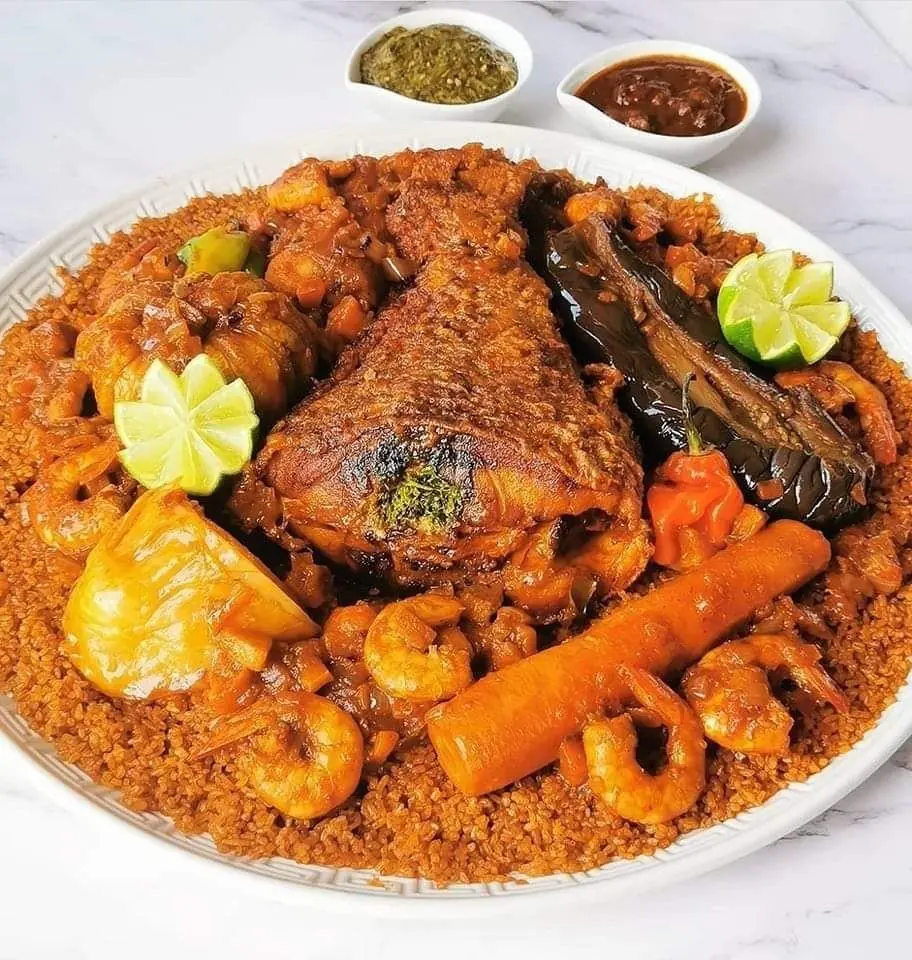
Le Thiéboudienne est le plat national du Sénégal : du riz brisé mijoté dans un bouillon de poisson et de légumes à la tomate, servi dans un grand plat traditionnellement partagé en famille. Considéré comme l'un des plats les plus emblématiques d'Afrique de l'Ouest, il a été inscrit au patrimoine culturel immatériel de l'UNESCO en 2021.
Le poisson est farci d'une pâte d'herbes aromatiques (le rof) avant d'être braisé, puis mijoté avec des légumes variés dans un bouillon tomaté qui sert ensuite à cuire le riz, lui donnant toute sa richesse de saveurs.
Histoire et origine
Le Thiéboudienne serait né dans la région de Saint-Louis, ancienne capitale coloniale du Sénégal, au XIXe siècle, selon la tradition orale locale qui attribue sa création aux cuisinières de la ville. Devenu plat national et symbole culinaire du Sénégal bien au-delà de ses frontières, il a été reconnu par l'UNESCO en 2021 comme patrimoine culturel immatériel de l'humanité, une reconnaissance rare pour un plat africain.
Les 5 versions de la recette
Végétarienne : Remplacer le poisson par des légumes supplémentaires (patate douce, courge) et utiliser un bouillon de légumes bien parfumé.
Végétalienne : Identique à la version végétarienne.
Sans gluten : Nativement sans gluten.
Économique : Utiliser des filets de poisson plutôt qu'un poisson entier, et limiter les légumes aux plus économiques (chou, carotte).
Gastronomique : Utiliser du thiof entier de belle taille et ajouter des crevettes fraîches ou des gambas au bouillon.
Service, conservation et accords
Dressage : Servir traditionnellement dans un grand plat familial, le riz au centre, entouré du poisson et des légumes, à partager à plusieurs.
Conservation : 2 à 3 jours au réfrigérateur dans un contenant hermétique.
Congélation : Le riz et le bouillon se congèlent bien ; le poisson est meilleur préparé frais.
Réchauffage : À la casserole à feu doux avec un peu d'eau, ou au micro-ondes couvert.
Accords mets-boissons : Bissap ou thé à la menthe (attaya).
Thiéboudienne is the national dish of Senegal: broken rice simmered in a tomato-based fish and vegetable broth, served in a large platter traditionally shared among family. Considered one of the most iconic dishes in West Africa, it was inscribed on UNESCO's Intangible Cultural Heritage list in 2021.
The fish is stuffed with an aromatic herb paste (the rof) before being seared, then simmered with assorted vegetables in a tomato broth that is later used to cook the rice, giving it its full depth of flavour.
History and origin
Thiéboudienne is said to have been born in the Saint-Louis region, former colonial capital of Senegal, in the 19th century, according to local oral tradition which attributes its creation to the city's cooks. Having become the national dish and culinary symbol of Senegal far beyond its borders, it was recognised by UNESCO in 2021 as Intangible Cultural Heritage of Humanity — a rare distinction for an African dish.
The 5 recipe variations
Vegetarian: Replace the fish with extra vegetables (sweet potato, squash) and use a well-seasoned vegetable broth.
Vegan: Identical to the vegetarian version.
Gluten-free: Naturally gluten-free.
Budget-friendly: Use fish fillets rather than a whole fish, and limit vegetables to the most economical options (cabbage, carrot).
Gourmet: Use a whole, good-sized thiof and add fresh prawns or langoustines to the broth.
Serving, storage and pairings
Plating: Serve traditionally in a large family platter, the rice in the centre surrounded by fish and vegetables, to be shared among several people.
Storage: 2 to 3 days in the refrigerator in an airtight container.
Freezing: The rice and broth freeze well; the fish is best prepared fresh.
Reheating: In a saucepan over low heat with a little water, or covered in the microwave.
Food and drink pairings: Bissap or mint tea (attaya).
Ingrédients
- 1 kg de poisson entier (thiof ou dorade), coupé en tranches
- 500 g de riz brisé
- 3 cuillères à soupe de concentré de tomate
- 1 chou, en quartiers
- 2 carottes
- 1 manioc, en tronçons
- 1 aubergine africaine
- 1 gombo
- Persil, ail, piment (pour le rof)
- 10 cl d'huile végétale
- Sel
- 1 kg whole fish (thiof or sea bream), cut into steaks
- 500 g broken rice
- 3 tablespoons tomato paste
- 1 cabbage, quartered
- 2 carrots
- 1 cassava, cut into chunks
- 1 African aubergine
- 1 okra
- Parsley, garlic, chilli (for the rof)
- 10 cl vegetable oil
- Salt
Préparation
- Préparer le rof en mixant le persil, l'ail et le piment ; farcir chaque tranche de poisson de cette pâte aromatique dans une incision.
- Faire dorer le poisson farci dans l'huile chaude quelques minutes de chaque côté, puis réserver.
- Dans la même marmite, faire revenir un peu d'oignon et ajouter le concentré de tomate, laisser cuire 5 minutes.
- Ajouter de l'eau pour former le bouillon, puis y déposer le chou, les carottes, le manioc et l'aubergine.
- Laisser mijoter 25 minutes, puis retirer les légumes cuits et les réserver au chaud.
- Remettre le poisson dans le bouillon et laisser cuire encore 10 minutes, puis le retirer délicatement et réserver.
- Filtrer le bouillon restant, y ajouter le riz brisé lavé, couvrir et laisser cuire 20 à 25 minutes à feu doux jusqu'à absorption complète du liquide.
- Dresser le riz dans un grand plat, disposer le poisson et les légumes par-dessus, et servir chaud.
- Prepare the rof by blending the parsley, garlic and chilli; stuff each fish steak with this aromatic paste through a slit.
- Sear the stuffed fish in hot oil for a few minutes on each side, then set aside.
- In the same pot, sauté a little onion and add the tomato paste; cook for 5 minutes.
- Add water to form the broth, then add the cabbage, carrots, cassava and aubergine.
- Simmer for 25 minutes, then remove the cooked vegetables and keep warm.
- Return the fish to the broth and cook for another 10 minutes, then carefully remove and set aside.
- Strain the remaining broth, add the washed broken rice, cover and cook for 20 to 25 minutes over low heat until all the liquid is absorbed.
- Mound the rice in a large platter, arrange the fish and vegetables on top, and serve hot.
Valeurs nutritionnelles (par portion)
- Calories
- ≈ 480 kcal
- Protéines
- 26 g
- Glucides
- 58 g
- Lipides
- 16 g
- Fibres
- 5 g
- Vitamines clés
- Vitamine A, Vitamine C
- Minéraux clés
- Fer, Potassium
Questions fréquentes
Pourquoi le Thiéboudienne a-t-il été reconnu par l'UNESCO ?
En 2021, l'UNESCO l'a inscrit au patrimoine culturel immatériel de l'humanité en reconnaissance de son importance sociale et culturelle centrale au Sénégal, où il est préparé et partagé lors de repas familiaux quotidiens.
In 2021, UNESCO inscribed it on the Intangible Cultural Heritage of Humanity in recognition of its central social and cultural importance in Senegal, where it is prepared and shared during daily family meals.
Qu'est-ce que le rof ?
C'est une pâte aromatique à base de persil, d'ail et de piment dont on farcit le poisson avant cuisson, essentielle à la saveur caractéristique du plat.
It is an aromatic paste made from parsley, garlic and chilli with which the fish is stuffed before cooking, essential to the dish's characteristic flavour.
Quel poisson utiliser si le thiof n'est pas disponible ?
La dorade ou le bar constituent d'excellentes alternatives, tout aussi savoureuses bien que le thiof reste le choix traditionnel au Sénégal.
Sea bream or sea bass make excellent alternatives, just as tasty though thiof remains the traditional choice in Senegal.
Quelle est la différence entre le Thiéboudienne rouge et blanc ?
La version rouge, la plus connue, utilise du concentré de tomate, tandis que la version blanche (thiou weuss) s'en passe pour une sauce plus claire aux herbes fraîches.
The red version, the best known, uses tomato paste, while the white version (thiou weuss) does without for a clearer sauce with fresh herbs.
Peut-on préparer le Thiéboudienne à l'avance ?
Oui, il se réchauffe bien, bien que le riz soit toujours meilleur préparé le jour même pour conserver sa texture optimale.
Yes, it reheats well, although the rice is always best prepared on the day to maintain its optimal texture.
Quels légumes sont traditionnellement utilisés ?
Le chou, la carotte, le manioc, l'aubergine africaine et le gombo sont les plus courants, mais la composition varie selon les régions et les saisons.
Cabbage, carrot, cassava, African aubergine and okra are the most common, but the composition varies by region and season.